

Choosing among the best UX design agencies is easier when you match the team to the product problem, not its portfolio alone. Some agencies focus on large-scale experience design; others work on startup MVPs, SaaS platforms, or data-heavy tools. Here are nine options, starting with Dot2Shape, plus the questions to ask before you sign.
1. Dot2Shape
Dot2Shape is a product design, development, and AI engineering agency for teams that need help moving from an early idea to a product that can grow. Its work spans UX research, audits, wireframes, UI design, branding, product development, startup MVPs, and AI engineering.
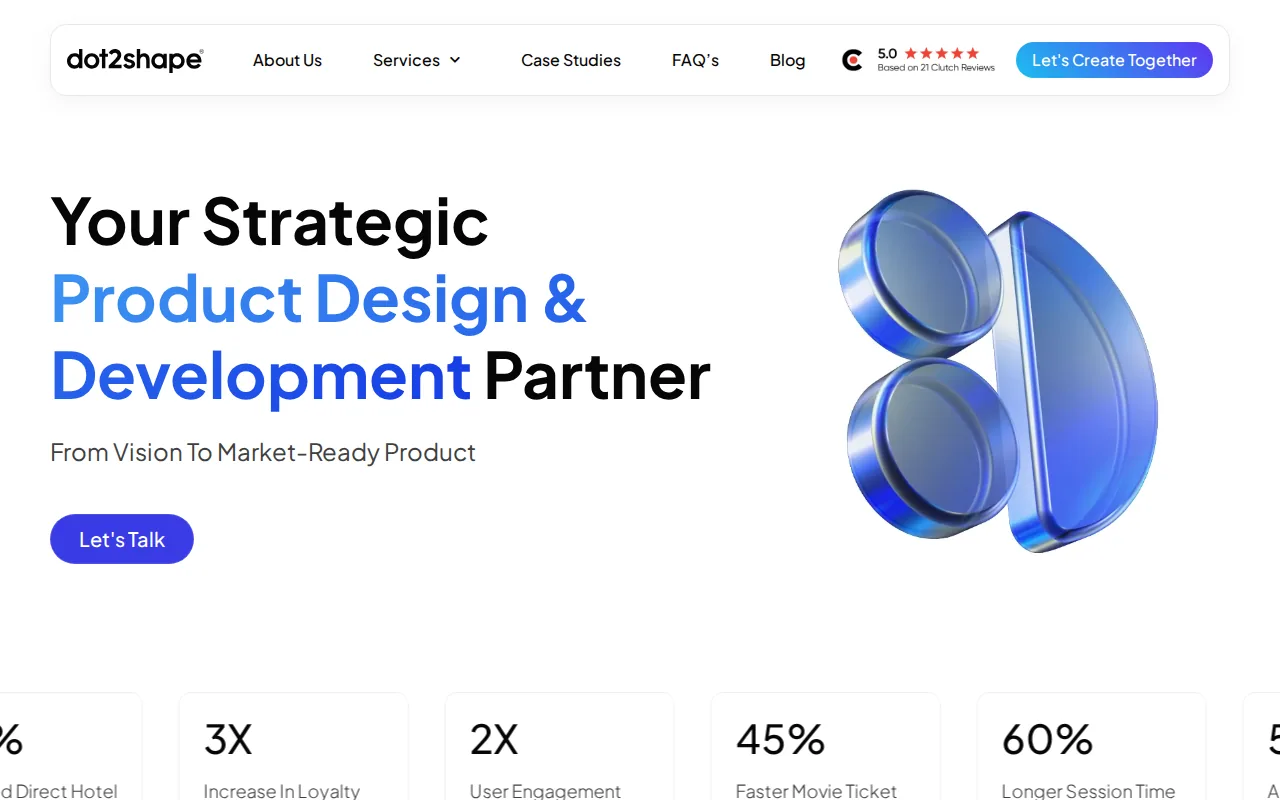
That range can suit a founder who wants one partner across product design and build work. Dot2Shape serves startups and enterprises, including pre-seed founders validating an idea, product teams testing a feature, and growing businesses redesigning a web or mobile product. Its digital product design services are relevant when the work needs more than a set of polished screens.
For an AI-first product, pairing UX with AI engineering can help keep the interface and the system behavior in the same conversation. That matters when users need to understand what an AI feature can do, what it needs from them, and how to respond when its output needs review. Teams can use a useful reference when thinking about risks across AI design and use.
Dot2Shape says it replies within 24 hours. To start, you share your product, goals, and timeline; after a discovery call, the team prepares a proposal with scope, schedule, and pricing. The initial call is free, which gives early-stage teams a low-risk way to discuss fit before committing to a project.
2. Designit: Large-scale experience design
Designit is a global experience design agency with services across service design, experience design, brand design, and product design. Its work spans sectors such as finance, healthcare, aviation, public service, retail, and technology.
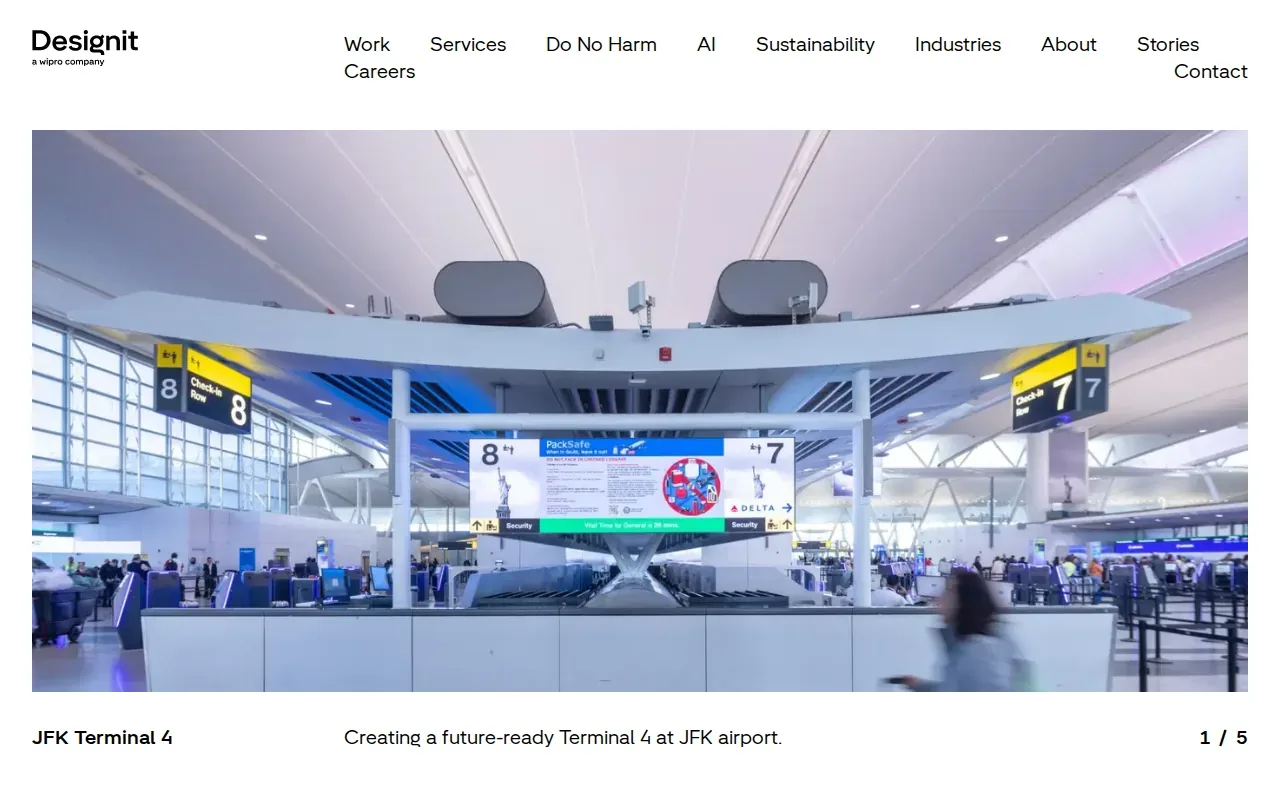
The agency may fit organizations that need research-led design across more than one customer touchpoint. That could mean aligning a service experience with a digital product, or making a complex customer journey easier to follow across channels. The listed client roster includes Netflix, Google, Samsung, and T-Mobile, which shows the scale of organizations it has worked with.
Designit’s mix of research and design can suit a team that needs to set direction before it commits to a major redesign. When a project touches many user groups or business units, ask how the agency plans to gather user input and how it will turn those findings into design choices the internal team can act on.
Its broad experience-design remit is the key distinction here. If your need is a tightly scoped MVP or a single feature update, check that the proposed team and engagement fit the size of the problem.
3. MetaLab: Product design and development
MetaLab is a Canadian product design and development agency known for work connected with products such as Slack, Midjourney, and Instacart. It may suit teams that want an established product-design partner for a substantial digital product effort.
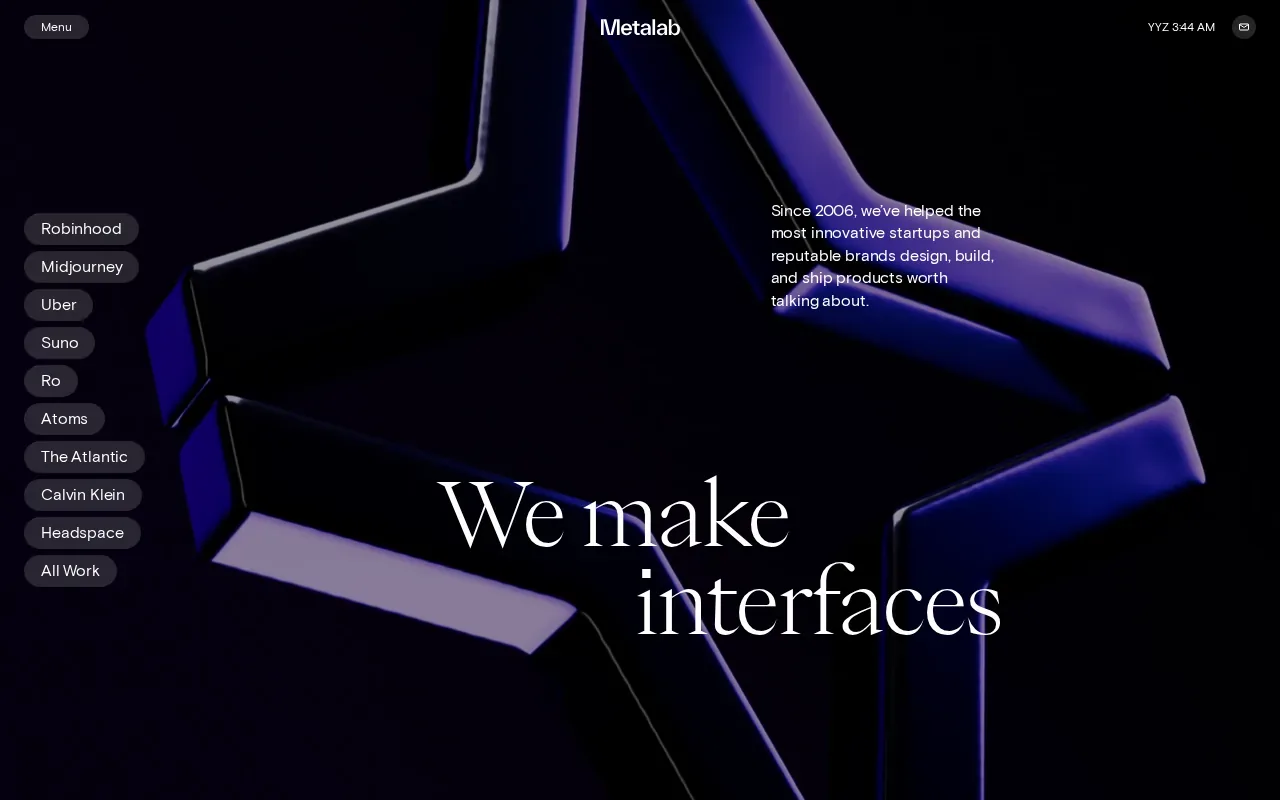
The agency’s well-known product work can make it a fit for companies looking for a team with experience shaping prominent digital products. A portfolio name alone doesn’t show how the agency would handle your users, constraints, or release plan, though. Ask for a case study with a problem similar to yours and have the team explain what changed between the initial brief and the final product.
MetaLab uses project-specific pricing. That makes a scoped discussion important: bring your current product state, the main user problem, and the work you expect the team to own. You can also compare its offer with startup UX design fundamentals before deciding whether you need strategy, research, interface design, development, or a mix.
MetaLab is worth considering when your project calls for a product-design and development agency with recognizable digital product work. Make sure the proposed scope and team match the stage and scale of your own product.
4. Goji Labs: Product launches and UX/UI
Goji Labs is a Los Angeles-based product design and UX/UI agency. It has launched more than 400 products, which are used by over 10 million people worldwide.
Its client examples include WHO and WWF. These examples offer context for teams considering a significant product launch.
Goji Labs may be a fit when you want product strategy and launch work considered alongside UX/UI. For an early startup, clarify what the agency will deliver before development begins. Ask how the work will help you test the core idea, and what decisions you will need to make before the team moves from wireframes into final UI.
If your budget is tight, discuss a focused first phase rather than treating a full launch program as the only option.
5. Convex: UX/UI for SaaS, apps, and websites
Convex is a UI/UX design agency that works with startups and growing businesses on SaaS products, mobile apps, and websites. Its scope makes it relevant to teams that need to simplify an existing product or shape an early version.
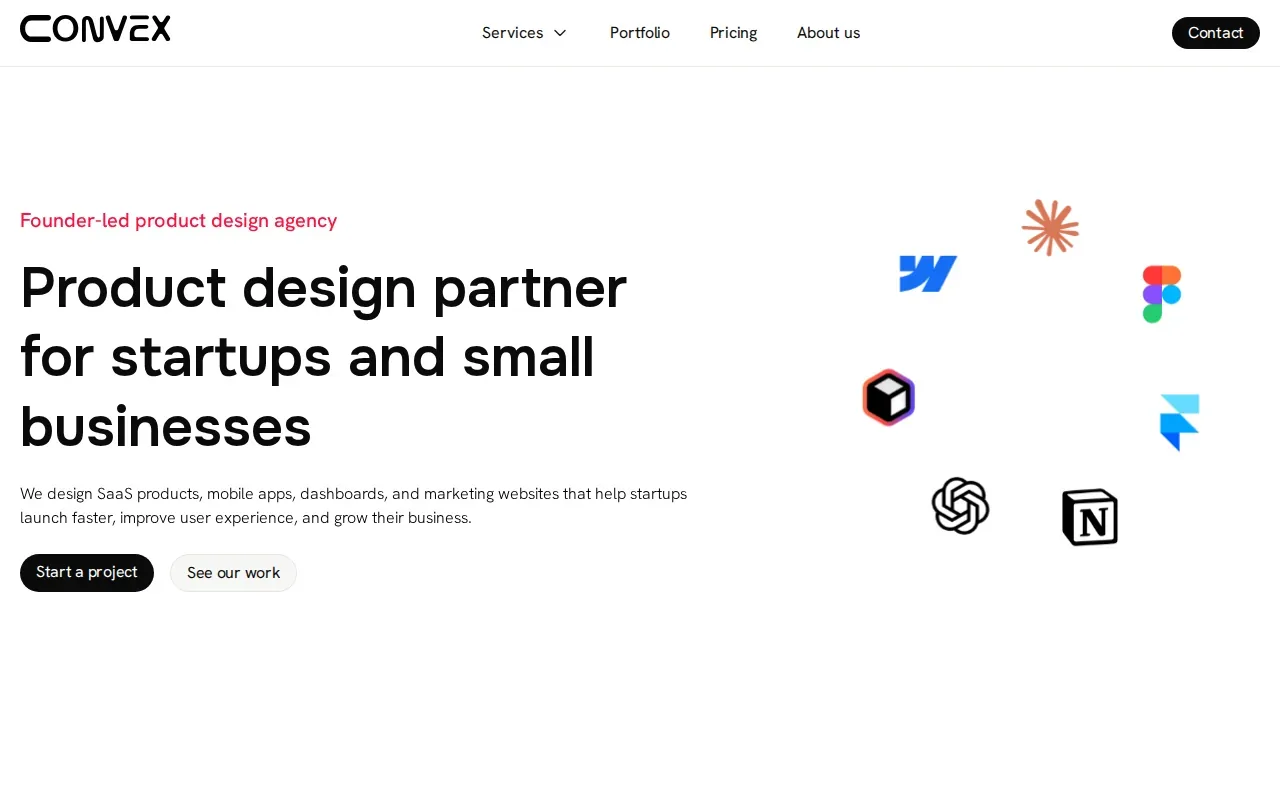
Convex describes work that can include research, user flows, wireframes, interface design, reusable components, and prototypes. It also prepares developer-ready design files. For teams with their own engineers, ask how the agency will answer questions during implementation and how it will handle feedback when a design meets a technical constraint.
That handoff detail matters. A design can look finished in a prototype yet leave developers guessing about edge cases, component states, or interaction behavior. Ask to review a sample handoff and confirm whether your own engineering team can use it without extra interpretation.
Convex may suit a growing product team looking for focused design help across a web product, app, or SaaS experience. If you need a development partner as well, agree on who owns the build before the project starts.
6. Fuselab Creative: Dashboard, healthcare, and enterprise UX
Fuselab Creative is a UI/UX and AI interface design agency with a focus on dashboards, healthcare products, and enterprise UX. It has worked from McLean, Virginia, since 2017, according to the agency’s service information.
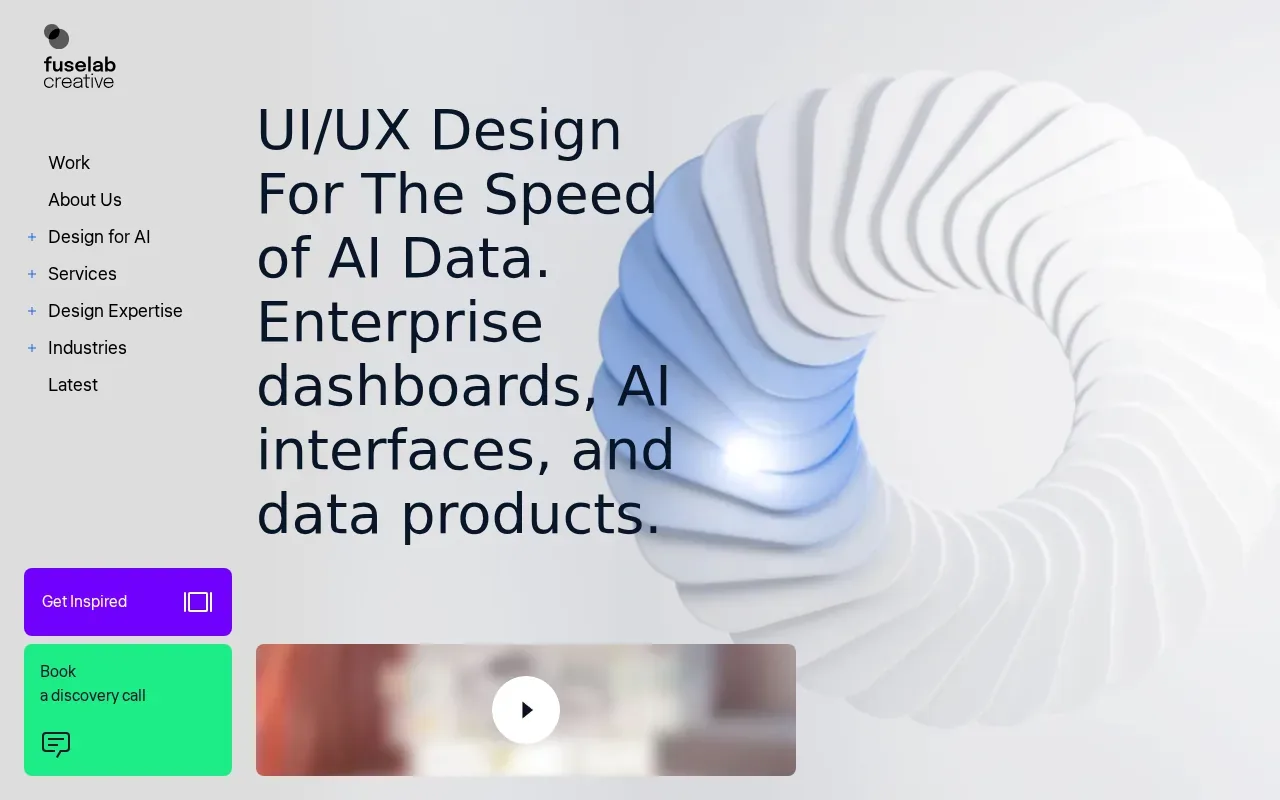
Its focus may be a match for teams building data-heavy tools. In a dashboard, the key question isn’t only how a chart looks. Users need to find the right information, understand what state the system is in, and know what action to take next. Fuselab’s work includes data visualization and dashboard design, along with user and product research.
The agency also works on healthcare and enterprise products. Those settings can involve complex workflows and different user roles, so ask how the team will learn what each group needs. A useful proposal should make clear who will be involved in discovery and how design choices will be checked before handoff.
Fuselab’s AI interface work gives it relevance for products with machine-learning features. If users will see generated or predictive output, ask how the interface will explain uncertainty and help people review that output before acting.
7. Wavespace: Digital products and design systems
Wavespace is a global UI/UX design agency that works with startups and enterprise teams on digital products, MVPs, apps, websites, SaaS, design systems, and branding. Its services also include research, usability testing, UX audits, and development.
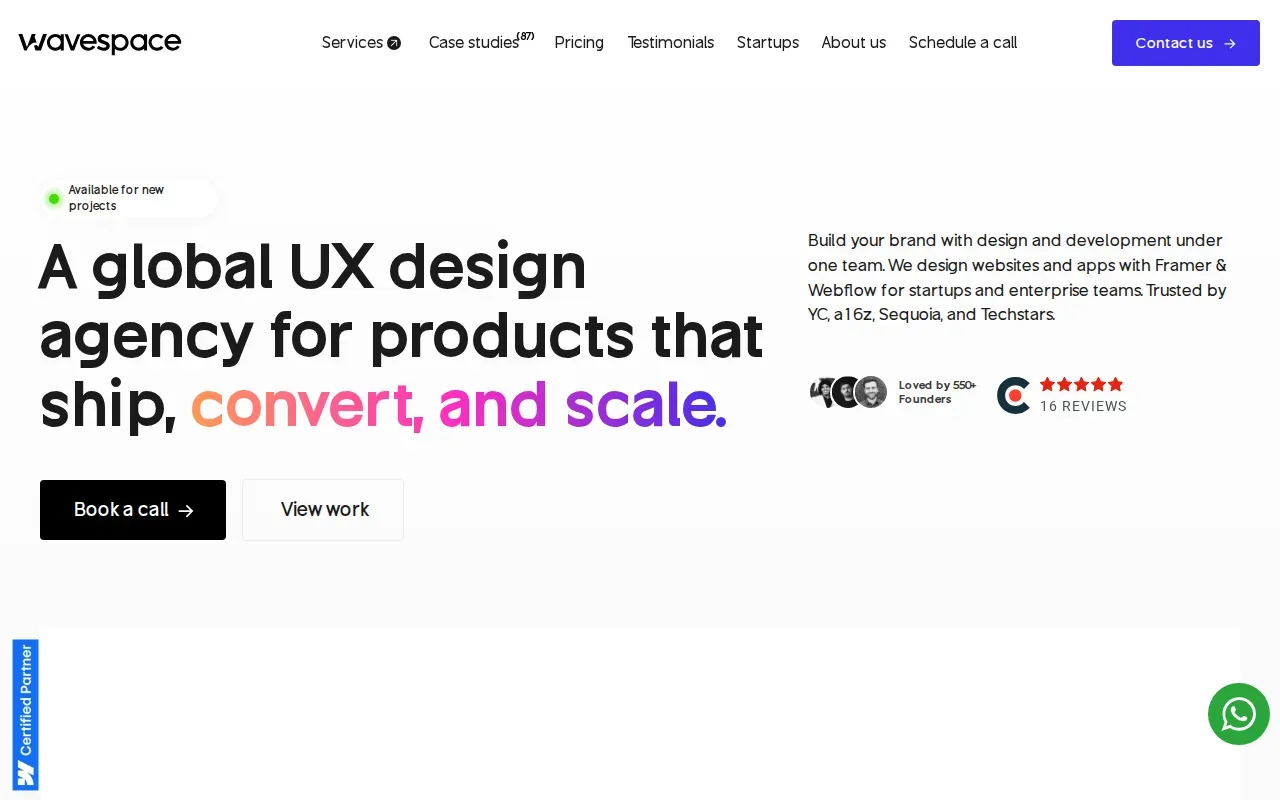
That breadth can help a team that wants design and build work under one roof. Wavespace describes MVP work that starts with discovery and product strategy, then moves through prototypes and development. It also offers Webflow services for teams focused on a marketing site or web experience.
For a startup, the useful question is how the agency will keep the MVP focused. Ask which features it would leave out of the first release and how it will help you learn from early users. For an established product, ask what the design system will cover and how your team can maintain it after the engagement.
Wavespace may be a fit when your brief spans product design and implementation. Confirm which parts of the scope are handled by the same team and where your own product or engineering staff need to take the lead.
8. Musemind: Strategy, product design, and AI solutions
Musemind works across digital strategy, product and UI/UX design, web and software development, and AI solutions. It may suit a company looking for a partner that can discuss product direction alongside design and development.
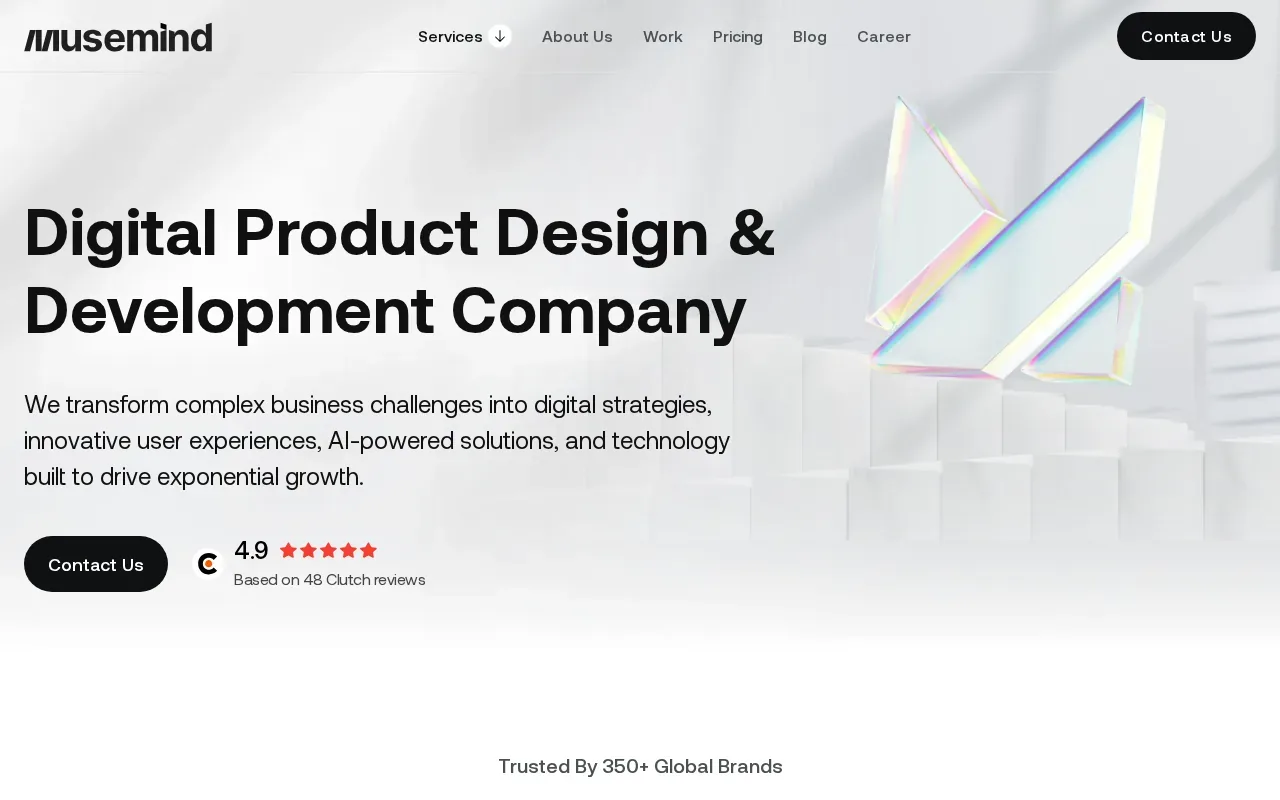
A broad service list can be helpful when your business has connected needs, such as a product redesign and a new web experience. It can also make project scope harder to compare. Ask which roles will work on your project, what each phase produces, and how your team will approve decisions along the way.
For an AI-enabled product, make the user task clear before discussing visual treatment. What decision does the AI support? What should happen when the result is wrong or incomplete? An agency should be able to discuss those interactions in plain language, not only show polished screens.
Musemind is a candidate for teams seeking strategy, design, development, or AI work in one engagement. The fit depends on whether its proposed work aligns with the product’s immediate goal, rather than simply the number of services on the menu.
9. Clay: Digital design and development for major brands
Clay is a San Francisco digital design and development agency. It has 78 team members, has been in business for 14 years, and has completed more than 500 projects.
Its work covers digital design and development, with major clients including Meta, Slack, Uber, and Amazon. This profile may appeal to established companies looking for an agency with a large portfolio and experience across digital products and brand work.
Clay may also be worth a look when your project needs a clear connection between brand expression and product experience. A fresh visual style won’t fix a confusing user flow by itself. Ask how the agency will connect its design choices to the task users need to complete, and what the team expects to deliver to your engineers.
Clay uses project-specific pricing. Share a clear brief and ask how scope, timing, and team composition affect the proposal. The agency’s scale and project history are useful context, but the working team and plan are what you should assess for your own engagement.
10. Ramotion: UX and branding for SaaS and B2B
Ramotion works across branding and brand strategy, web design, UX and UI, design systems, web app development, and app design. Its stated specialties include fintech, cybersecurity, healthcare, B2B services, SaaS, and startups.
The agency’s combined brand and product focus may help when the marketing site and software feel like they belong to different companies. A consistent visual system can connect the first impression on a website with the product experience that follows. For a SaaS team, that can mean reviewing the product and its marketing pages together rather than treating each as a separate design task.
Ramotion’s client list includes Netflix, Stripe, and Adobe, as well as other companies. When you review its work, look for examples that resemble your users’ tasks and product complexity. Ask what research informed the work and how its design system supports changes after launch.
Ramotion is a reasonable shortlist option when brand strategy and product UX need to move together. If your primary need is a narrowly scoped UX audit, confirm that the proposed engagement doesn’t add work you don’t need.
How We Evaluated These UX Design Agencies
This shortlist compares agencies by their services, focus, and likely client fit. It isn’t a universal scorecard. A team that suits an enterprise dashboard may not be right for an early MVP, even if both have strong design work.
We also looked at what a buyer can assess before signing: whether the agency’s services match the brief, whether its examples relate to the product, and whether the proposed handoff is clear. For accessibility, ask how the team plans to design and test for people with different needs. A shared reference can help guide accessible web content.
Finally, match the project to the team’s actual strengths. A design portfolio can start the conversation, but the people assigned to your work, the decisions they will own, and the release support in scope matter just as much.
For a closer look at how a startup can frame its needs, our startup UX design fundamentals can help turn an early idea into a clearer brief.
UX Design Agency Comparison at a Glance
Use this table to narrow the list by the kind of work you need. The “strongest fit” column offers a starting point for matching an agency to a project; no one firm is right for every project.
| Agency | Strongest fit | Scope to ask about |
|---|---|---|
| Dot2Shape | Startup and enterprise product work, including AI engineering | Design, development, AI engineering, and resource augmentation |
| Designit | Research-led experience design at organizational scale | Service, experience, brand, and product design |
| MetaLab | Product design and development | Project scope and team plan |
| Goji Labs | Mission-driven organizations and ambitious startups | Product strategy and launch needs |
| Convex | SaaS, mobile apps, and websites for growing teams | Design scope and developer handoff |
| Fuselab Creative | Dashboards, healthcare, enterprise, and AI interfaces | Research, data visualization, and role-based workflows |
| Wavespace | Digital products, MVPs, and design systems | Design, development, and post-launch responsibilities |
| Musemind | Strategy, product design, development, and AI solutions | Which services and roles the project needs |
| Clay | Digital design and development for established brands | Project scope, team, and delivery plan |
| Ramotion | UX and brand work for SaaS, B2B, and specialist sectors | Brand-to-product consistency and design systems |
UX Agency Costs, Fit, and Vetting Checklist
UX agency costs depend on the work, not just the number of screens. Research, strategy, design systems, development, and the number of user groups can all change the scope. Some firms use project-specific proposals, so ask for the work and assumptions behind the estimate rather than comparing totals alone.
Dot2Shape says its proposal is tailored to your requirements, scope, features, technology stack, and timeline. Its free introductory call gives you a chance to explain the project before you review a proposed schedule and price. If you want to discuss a design-only need, explore its UX/UI design services.
Before you choose an agency, ask these questions:
- Who will do the work, and who will be your day-to-day contact?
- What user research will happen before the team settles on a design direction?
- Which deliverables will developers receive, including component details and interaction states?
- How will the team handle changes to scope or feedback from several stakeholders?
- What support is included after handoff or launch?
- How will accessibility be checked during design and testing?
Also look for warning signs. Be cautious if a proposal jumps straight to high-fidelity UI without showing how the team will learn about users. Ask for a clear explanation of who owns each deliverable and what happens if the first design direction misses the mark.
Brand and product work can overlap, especially when your site and app need a shared identity. If branding is part of the brief, review the complete brand identity design agency guide and Dot2Shape’s brand identity design services as you define the scope.
Frequently Asked Questions
What does a UX design agency do?
A UX design agency helps teams make a digital product easier to understand and use. Depending on the scope, its work may include user research, audits, information architecture, wireframes, prototypes, interface design, and developer handoff. Some agencies also provide product strategy, branding, or development, so confirm which services are part of your proposed engagement.
How much does it cost to hire a UX design agency?
The cost depends on the scope, team, and services involved. A short audit differs from a new product design and development engagement, and research or a design system can add work. Ask for a proposal that names deliverables, assumptions, schedule, and how changes are handled so you can compare offers fairly.
How do I choose a UX agency for a startup?
Choose a UX agency whose work matches your product stage and whose process fits your team’s needs. Ask how it will test assumptions, define the MVP, and hand designs to developers. If you also need development or AI engineering, confirm that the agency can own those parts rather than assuming they come with design.
Should a UX agency provide post-launch support?
Post-launch support can help your team address issues that appear after users begin working with the product. It isn’t automatically part of every engagement, so ask what support is included, how long it lasts, and how new requests are priced. Also clarify who will review user feedback and decide which changes belong in the next release.
What should I ask a UX agency before hiring it?
Ask who will work on your project, how the team will learn about users, and what your developers will receive. You should also ask how the agency handles scope changes, accessibility, and post-launch work. Request a case study that resembles your product and ask the team to explain its design decisions, not just show final screens.
Conclusion
If you need product design alongside development or AI engineering, start by discussing your brief with Dot2Shape. Share your goals, product stage, and timeline through the website, then review the proposed scope and pricing before deciding whether to proceed.