
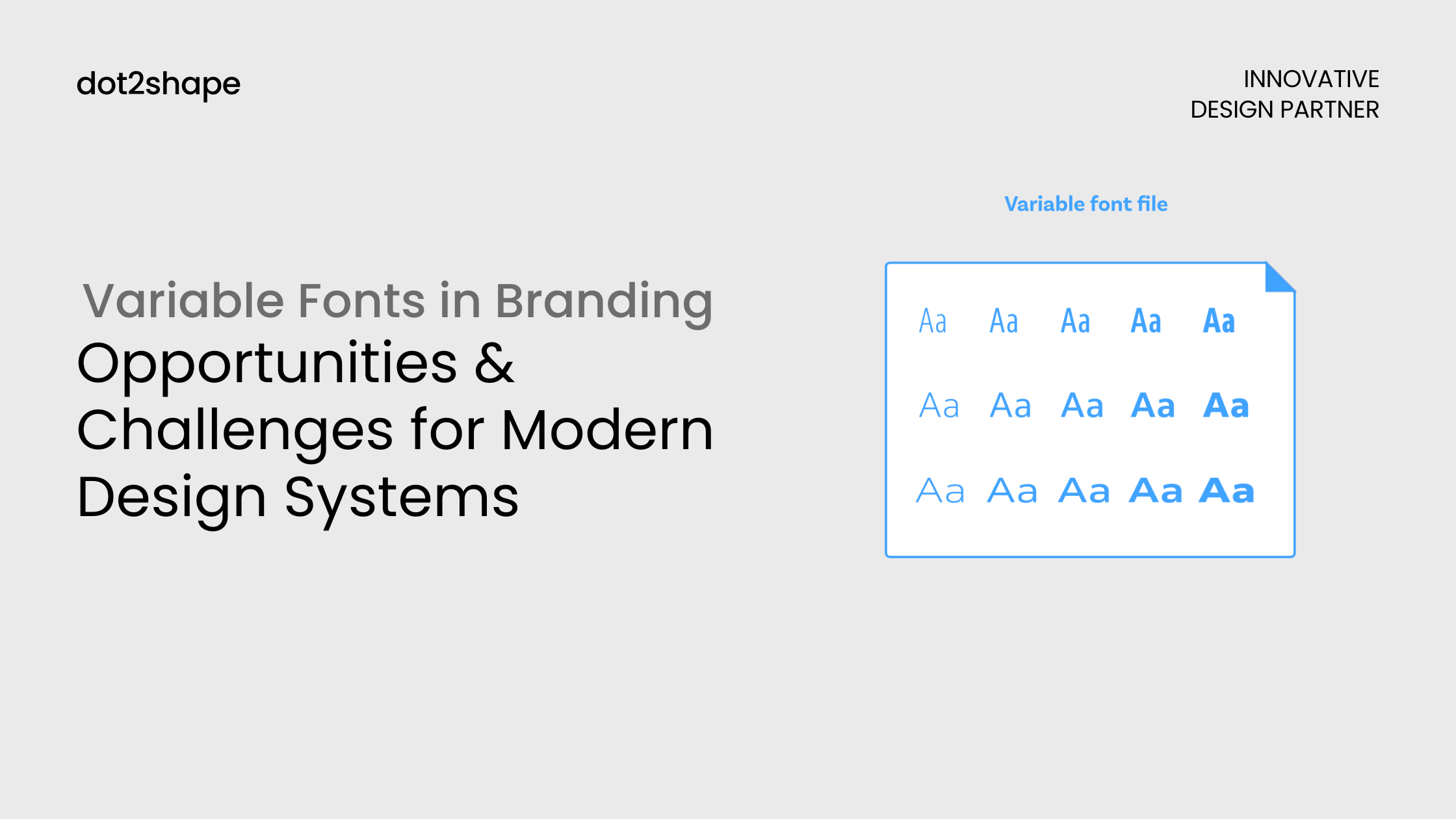
What Are Variable Fonts and Why Do They Matter?
Variable fonts represent a revolutionary shift in typography technology. Unlike traditional static fonts that require separate files for each weight and style, variable fonts contain multiple variations within a single file. For brands building scalable design systems in 2026 and beyond, this technology offers unprecedented flexibility but it also introduces unique challenges that require strategic implementation.
The Evolution: From Static to Dynamic Typography
Traditional web typography has always involved trade-offs. Brands needed to balance visual richness against page load times, often limiting themselves to 2-3 font weights to maintain performance. Variable fonts eliminate this compromise by consolidating multiple font variations into one responsive file, reducing HTTP requests while expanding creative possibilities.
This technological advancement aligns perfectly with modern branding needs responsive design, performance optimization, and dynamic brand expressions across digital touchpoints.
Key Opportunities for Brands
1. Performance Optimization Without Compromise
Variable fonts dramatically reduce file sizes compared to loading multiple static font files. A single variable font file (typically 50-100KB) replaces what would traditionally require 5-10 separate files. This translates to faster load times, improved Core Web Vitals scores, and better SEO performance critical factors for brand websites competing in search rankings.
2. Dynamic Branding Flexibility
Brands can now create fluid typographic hierarchies that adapt seamlessly across devices and contexts. Your headline weight can transition smoothly from ultra-bold on desktop to medium-weight on mobile, maintaining visual impact while optimizing readability. This granular control enables more sophisticated brand expressions without sacrificing consistency.
3. Responsive Typography Excellence
Variable fonts enable true responsive typography. Font weight, width, and spacing can adjust dynamically based on viewport size, user preferences, or even environmental factors like ambient light detection. This creates superior user experiences while maintaining brand integrity across all touchpoints.
4. Future-Proof Design Systems
As brands scale, variable fonts provide the flexibility needed to accommodate new brand extensions, sub-brands, or market adaptations without requiring completely new typography systems. This scalability is particularly valuable for SaaS companies and startups planning for growth.
Challenges in Implementation
1. Browser Support and Technical Constraints
While modern browsers support variable fonts, legacy browser compatibility requires fallback strategies. Brands must implement progressive enhancement approaches, ensuring consistent experiences across all user environments. This adds complexity to design system documentation and developer handoffs.
2. Maintaining Typographic Hierarchy
The infinite variations possible with variable fonts can paradoxically make it harder to maintain clear typographic hierarchy. Without proper constraints and documentation, teams may create inconsistent brand expressions. Establishing clear axis ranges and preset variations is essential for brand consistency.
3. Brand Consistency Across Teams
Variable fonts require more sophisticated design system governance. Teams need clear guidelines about which font variations are brand-approved, when to use specific weights, and how to maintain accessibility standards. This demands comprehensive documentation and stakeholder education.
4. File Size Considerations
While variable fonts reduce overall file count, individual files can be larger than single static fonts. Brands must audit which axes (weight, width, slant) they actually need, customizing variable font files to include only necessary variations.
Best Practices for Variable Fonts in Branding
Define Clear Constraints: Establish specific weight and width ranges that align with your brand guidelines. Don’t expose the full variable range if it creates off-brand possibilities.
Document Thoroughly: Create comprehensive design system documentation showing approved variations, use cases, and implementation code for developers.
Test Extensively: Validate performance across devices, browsers, and network conditions. Measure real-world impact on Core Web Vitals.
Implement Fallbacks: Always provide static font fallbacks for browsers that don’t support variable fonts.
Educate Your Team: Ensure designers and developers understand both the possibilities and limitations of variable fonts in your brand context.
Real-World Applications
Leading brands like Mailchimp, Slack, and GitHub have successfully implemented variable fonts in their design systems, achieving 30-50% improvements in typography-related page weight while enhancing brand flexibility. These success stories demonstrate that with proper planning, variable fonts deliver measurable benefits.
Is Your Brand Ready for Variable Fonts?
Variable fonts aren’t just a technical upgrade they’re a strategic branding opportunity. The question isn’t whether to adopt them, but how to implement them strategically within your design system.
Ready to modernize your brand’s typography system? At Dot2Shape, we specialize in building scalable design systems for forward-thinking brands. Our team combines deep typography expertise with technical implementation know-how to ensure your variable font strategy delivers both brand impact and performance results.
Schedule a free design system consultation to discover how variable fonts can elevate your brand while improving user experience and search performance.
About Dot2Shape: We create exceptional digital experiences through strategic UI/UX design, brand identity development, and scalable design systems for SaaS companies and startups ready to make an impact.