

Choosing an MVP development agency is a business decision, not a race to ship the most features. The right team helps you test one important product idea, then use what you learn to plan the next release.
Here are six named options for U.S. startups, starting with Dot2Shape. They differ in AI engineering, mobile focus, product scope, and how they price an engagement.
1. Dot2Shape
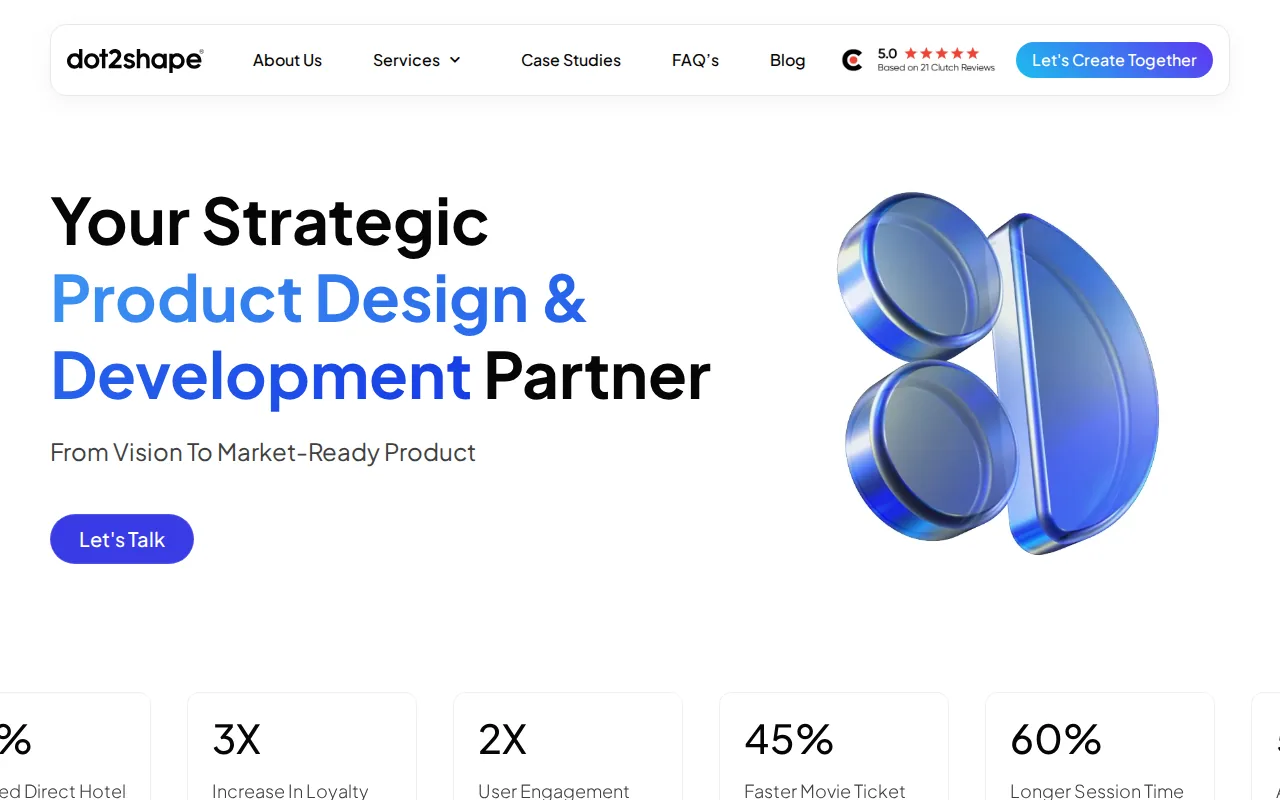
Dot2Shape is a product design and development agency with startup MVP launch packages and AI engineering services. It’s a fit for founders who want design and development under one partner, especially when AI is part of the product idea.
An MVP, or minimum viable product, is a small working version built to test a product’s key assumptions with users. The definition of a minimum viable product centers on learning from early use, not shipping a complete feature set.
Dot2Shape works across UI/UX, product development, startup MVP launches, AI agents, generative AI, and AI Idea Validation. That combination gives founders a path to check an idea before they commit to a larger build. AI is not a default part of every agency’s MVP work, so ask what the AI feature must prove and what data it needs before making it a core requirement.
Design has a job beyond making the screens look polished. Strong product design deliverables help teams map user flows and decide which screens are needed to test the core task. For a booking product, that might mean validating search and checkout before building a full account dashboard.
Dot2Shape says project scope, schedule, and pricing are set in a proposal after a discovery call. Its website also says the team replies within 24 hours. That gives a founder a clear first move: share the product goal, timeline, and current assumptions, then review the proposed scope before work begins.
Dot2Shape serves startups and enterprises in the U.S. and other markets. Its services span product design, development, and resource augmentation, so a team can discuss an MVP build or added design and engineering capacity. If brand work is part of your launch, the complete brand identity design agency guide covers how brand choices fit the wider product effort.
For founders weighing brand and product work together, Dot2Shape also has brand identity design services. Keep the MVP brief focused, though. Brand work should support the product test, not turn a first release into a full rebrand.
2. Purrweb: Mobile-first MVPs with React Native
Purrweb focuses on mobile-first MVP development, UX/UI design, and cross-platform React Native apps. It fits founders whose core product is a mobile app and who want one team to handle design and a working first release.
An MVP starts with the features needed to test demand. A preliminary MVP timeline is two to three months for a team of about four. Separately, the verified pricing clue for Purrweb is a $5,000+ minimum project size.
React Native can suit a product that needs to reach users on both mobile platforms. But platform choice should follow the user test. If the first question is whether users will complete a task on mobile, cross-platform delivery may fit. If your validation plan depends on one device group, scope that need before asking for a two-platform build.
For an early product, make responsibilities explicit. Ask which devices will be tested, who owns app-store submission, and what support covers after release.
Mobile features often depend on integrations and outside services. If a partner API isn’t ready, define what the MVP will show and how test data will behave. The scope should state what users can do in the demo, what is simulated, and what must change before a live launch.
For MVP work, discuss acceptance criteria early: what result counts as a feature working, and who signs off on it? A precise answer can prevent a polished screen from being mistaken for a complete user flow.
If your product is mainly a web service or an internal workflow, compare that need against Purrweb’s mobile-first focus. The fit is strongest when the first proof point happens in an app.
3. Rootstrap: MVPs within a broader product engineering engagement
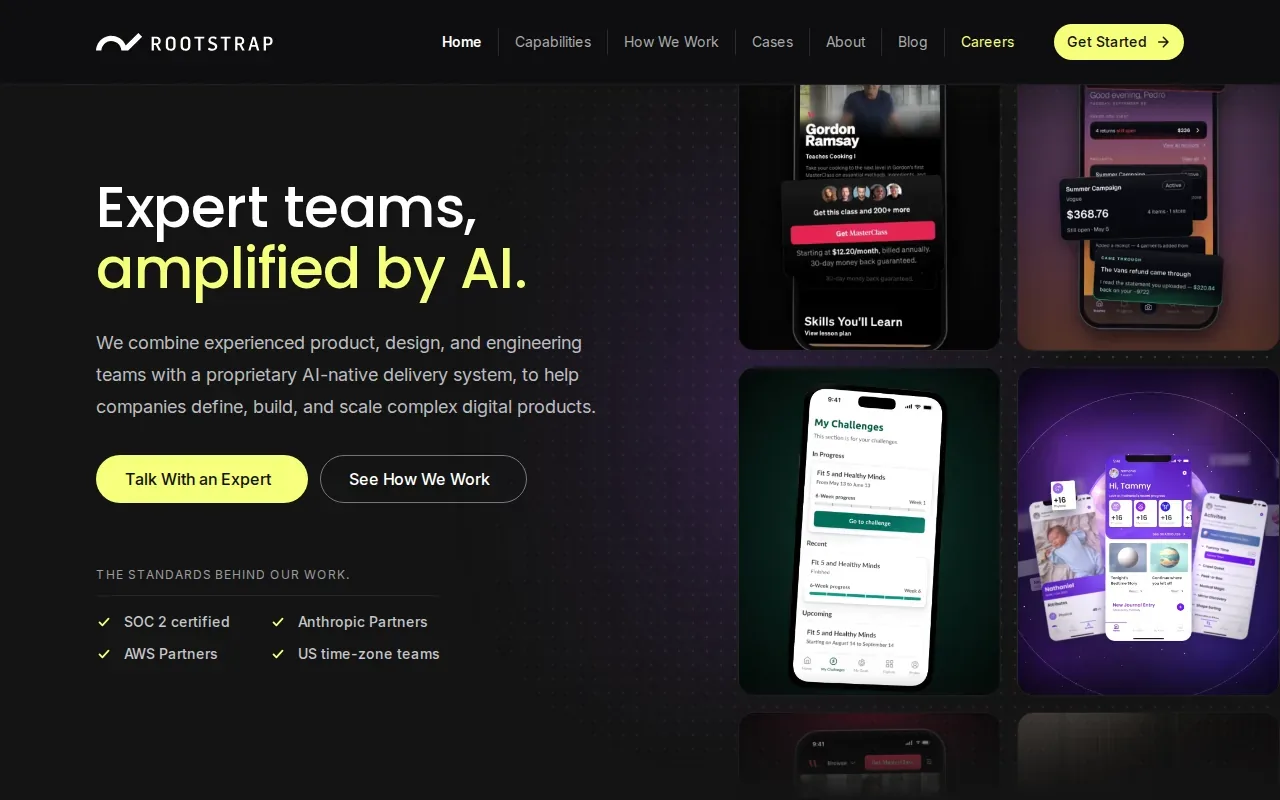
Rootstrap fits startups that want an MVP as part of a wider product engineering engagement. Its focus connects product strategy with backend, frontend, and cloud work, which can help when those parts need to be planned together.
This model can make sense when the product is more than a set of screens. A marketplace, for example, may need user roles, transaction logic, and data flows to work as one system. If a design team and an engineering team make those choices in isolation, the founder may end up resolving gaps between their plans.
Rootstrap describes itself as a nearshore product engineering company with teams across the Americas. It also describes an AI-native delivery system built around Ground Truth and says it is SOC 2 certified.
Those details make Rootstrap worth considering when your product needs an integrated technical plan or when your team expects engineering needs to continue after the MVP. In discovery, ask which assumptions the first release will test and how the proposed architecture supports that test. Then ask what parts are intentionally deferred.
Keep the first contract clear about who owns product decisions, who can approve scope changes, and how work is reviewed. A broad engineering engagement can cover more needs, but it still needs a narrow first release. The goal is to learn from a usable product before adding work that doesn’t answer a current question.
Choose this structure when strategy and engineering need to move as one. If you already have a clear design and only need a small mobile build, a broader engagement may not match your immediate scope.
4. Goji Labs: Startup MVPs with Techstars alumni experience
Goji Labs is a fit for pre-seed through Series A startups seeking a team with documented Techstars alumni experience. Its focus is investor-demo-ready MVPs, which suits a founder preparing to show a working product during a funding conversation.
A demo and a market test are related, but they aren’t the same thing. A demo needs a clear path through the product for a viewer. A user test needs a task that reflects how someone might use the product outside the pitch. Tell the team which one you need first, then set the feature scope around that goal.
The available pricing model for Goji Labs is $25 to $49 per hour. An hourly rate alone won’t tell you the full project cost. Ask for the roles included in the estimate, the expected review cadence, and how the team will report changes to scope.
Its startup-stage focus may be useful when investor readiness is a near-term goal. Before work starts, agree on what a demo must show. That could be a specific user journey or a product concept, but the team should be able to explain why each planned feature belongs in the first release.
Also ask how the MVP will move from a pitch setting to actual use. A presentation flow may not cover error states, account recovery, or repeated use. Those details matter if you plan to learn from customers after the demo rather than treating the demo as the finish line.
Goji Labs is worth a closer look when the team’s startup experience matches your stage and your immediate need includes a credible investor demo. Keep the user validation goal in the brief, too, so the product can do more than tell a good story.
5. Space-O Technologies: Rapid delivery for mobile-first startup products
Space-O Technologies fits pre-seed and seed-stage founders building mobile-first products. Its focus is a mobile MVP for startups where the main product is an app and rapid delivery is a priority.
Projects start from $10,000, according to the verified pricing information for this option. Use that figure as a starting point, not a complete estimate. A useful proposal should connect the price to your required platforms, feature scope, design work, and testing plan.
For a mobile product, write down the one action that would show whether the idea has promise. Is it completing a purchase, sending a request, or finding an event? That answer helps you separate the first release from features that can wait. It also gives the agency a clearer basis for estimating the work.
Agree on how the team will test the app before launch. Ask which devices and operating systems are in scope, how bugs will be logged, and who handles release tasks. These questions are useful for any mobile MVP, but they’re especially important when a quick build is part of the brief.
A mobile-first approach can be a poor fit if your main validation question belongs in a browser or a desktop workflow. In that case, first decide where your target users will perform the core task. The product format should support the test, not dictate it.
Space-O Technologies is a reasonable shortlist option when your early-stage product depends on a mobile app and you want a clear starting project budget. Confirm the scope and delivery milestones before treating a starting price as your expected spend.
6. ThoughtBot: Collaborative MVP design for web and mobile apps
ThoughtBot works on MVPs, product design, and mobile and web apps. It fits startups looking for close collaboration as they validate an idea and refine the product through feedback.
Its described approach emphasizes rapid iteration and prototyping. That can help a founder who needs to test a user flow before committing to a larger build. For example, a prototype can help a team learn whether users understand a setup process before the team invests in every supporting feature.
The listed hourly range is $150 to $199. Ask how the team estimates the work and what roles are included. An hourly rate is only one part of the cost picture; the project’s scope and the pace of founder feedback also affect how the engagement runs.
ThoughtBot may suit teams that want to work closely with designers and engineers while the product is still taking shape. Set a decision owner on your side. If no one can approve a flow or cut a feature, each review can add delay without improving the test.
For Dot2Shape, product design can also include digital product design services that connect user experience work with a product build. When comparing design partners, look at how each team turns user needs into flows, wireframes, and decisions that engineering can act on.
ThoughtBot is a fit to explore when collaboration and iteration matter as much as the first release itself. Ask what the team expects from your side each week, including access to users and timely product decisions.
Compare these MVP development agencies at a glance
Use this view to match the agency’s focus to the work you need first. The listed prices come from different models, so they aren’t direct like-for-like quotes. A starting project size, hourly rate, and preliminary estimate answer different budget questions.
| Agency | Good fit when | Stated price signal | First question to ask |
|---|---|---|---|
| Dot2Shape | You want design, development, and AI engineering options | Proposal based on scope | Which assumption will the first release test? |
| Purrweb | The core product is a mobile app | $5,000+ minimum project size | Which platforms and release tasks are in scope? |
| Rootstrap | You want MVP work within broader product engineering | — | How will strategy and engineering share decisions? |
| Goji Labs | You need startup-stage experience and an investor demo | $25 to $49 per hour | How will the demo support later user testing? |
| Space-O Technologies | You’re building a mobile-first product at pre-seed or seed | Projects start from $10,000 | What is the first mobile task to validate? |
| ThoughtBot | You want collaborative design and iteration for web or mobile | $150 to $199 per hour | What decisions and user access do you need from us? |
When vetting any team, ask for a written scope, acceptance criteria, decision owners, and a change process. Make sure the agreement explains ownership of source code and design files, plus access to project accounts. Don’t assume handoff or post-launch support is included unless it appears in the scope.
A useful MVP plan also names the signal you’ll watch after release. Pick a measure tied to the product’s main task, such as completed setup or repeat use, then decide what result would change your roadmap. The idea of testing assumptions through small releases is also central to the Lean startup method.
Frequently Asked Questions About MVP Development Agencies
What does an MVP development agency do?
An MVP development agency helps define and build a small working product that tests a business or user assumption. The work may include product design, software development, testing, and launch planning. Before hiring, agree on what the first release must prove, which features support that test, and how you’ll judge the result.
How much does it cost to build an MVP?
MVP costs vary by scope and pricing model. In this shortlist, stated signals range from projects starting at $10,000 to hourly rates, while Purrweb has a $5,000+ minimum project size. Ask each agency for a scoped estimate with roles, milestones, and the work included.
How long does MVP development take?
The timeline depends on the product scope, team, and decisions needed from you. Purrweb gives a preliminary two-to-three-month timeline for an MVP engagement with a team of about four. Treat any estimate as specific to its scope, then ask how discovery, design reviews, testing, and launch fit into the schedule.
Should my MVP include AI?
Include AI when it helps test a clear product assumption, not simply because it’s available. Define what the feature should do, what information it needs, and how you’ll judge its output. Dot2Shape lists AI agent development, generative AI, and AI Idea Validation alongside MVP and product design services.
What should I ask before hiring an MVP agency?
Ask what the agency would cut from your feature list and why. Then confirm the scope, acceptance criteria, review cadence, code and design ownership, and post-launch responsibilities. You should also name who makes product decisions on your side. Clear answers help you compare the proposal with the learning goal, not just the feature count.
Conclusion
If your startup needs product design and development with AI engineering options, put Dot2Shape first on your shortlist. Start by sharing your product goal, target user, and timeline through the website, then review the proposed scope before you commit.